
Roller Burnishing Tools
Internal, external and single roll burnishing tools for CNC lathes and machining centres. Mirror-finish surfaces in seconds — no grinding, no honing, no material removal.
Roller Burnishing Tool Range
Multi-Roller Tools
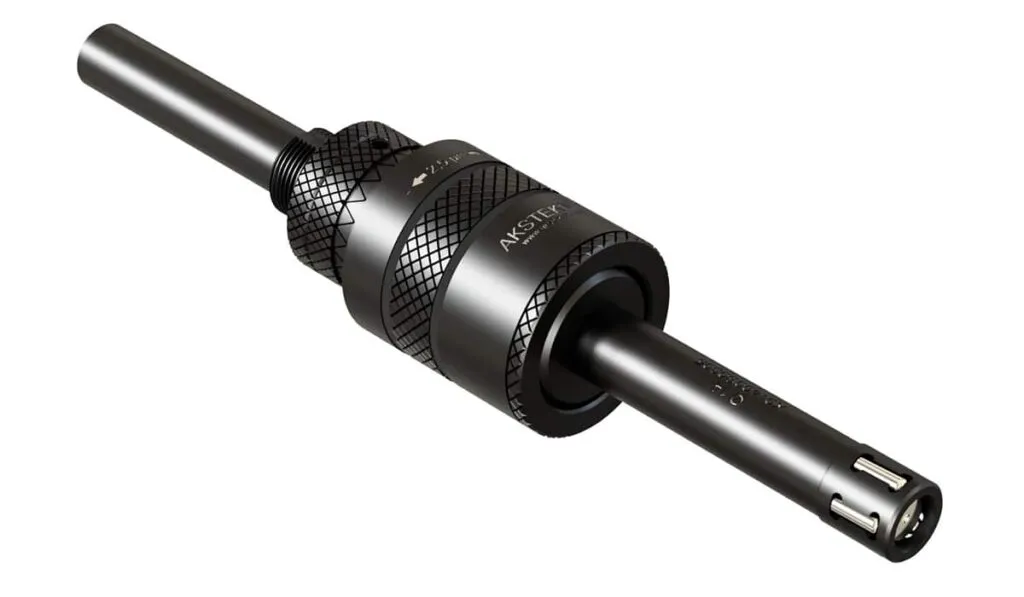
TI Series
Internal Roller Burnishing Tools
Multi-roller tools for through holes, blind holes and stepped bores. Diameter range: 10–160 mm. Self-feeding and machine-feeding variants for universal and CNC machines.
View product range →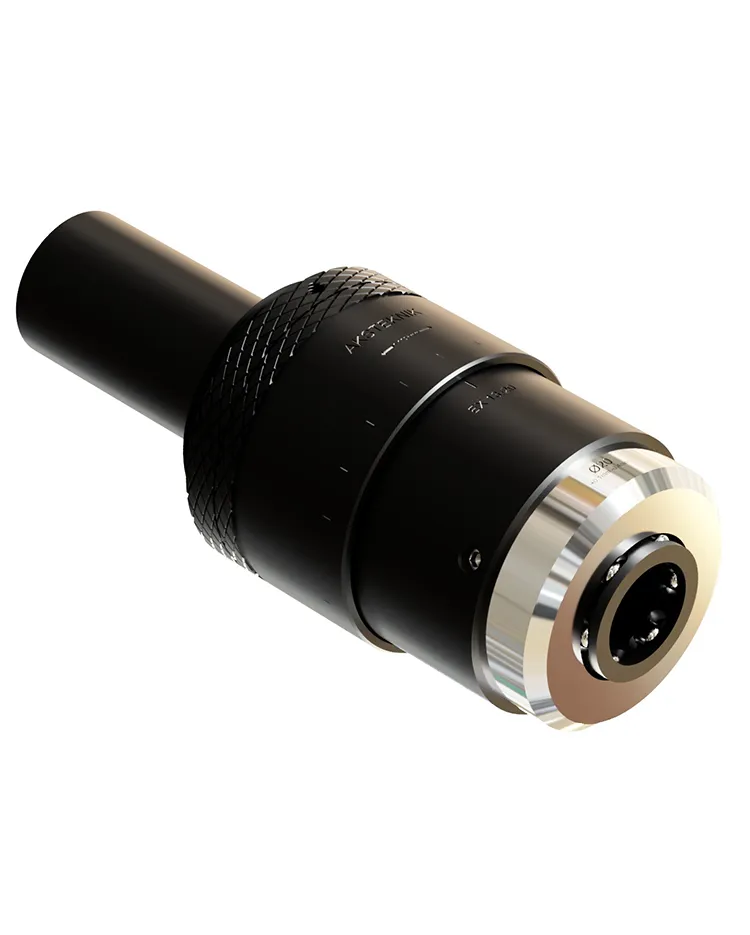
TE Series
External Roller Burnishing Tools
Multi-roller tools for straight shafts and stepped shafts. Diameter range: 3–20 mm. Self-feeding and machine-feeding variants.
View product range →Single Roll Tools
What is Roller Burnishing?
Roller burnishing is a chipless finishing process that uses hardened rollers to plastically deform the surface of a metal workpiece. The rollers press against the surface with controlled force — roughness peaks are compressed into valleys, producing a smooth, mirror-like finish.
Unlike grinding or honing, no material is removed. The surface is cold-worked: the grain structure is compressed rather than cut. This creates a mechanically superior surface with higher load-bearing capacity, increased hardness and compressive residual stress that improves fatigue life.
The process takes seconds — not minutes. A pre-turned bore of Ra 3.2 µm becomes Ra 0.1 µm in a single pass. No chips, no grinding dust, no sludge, no secondary operation.
Which Tool Do I Need?
- Internal bores (through or blind holes) — diameter 10–160 mm → TI Series
- External shafts — diameter 3–20 mm → TE Series
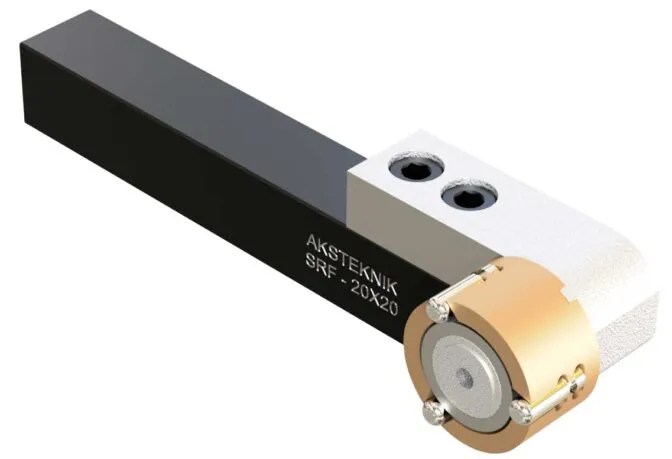
- Contours, faces, fillets, cones — flexible single roller → SRF Series
- Manual machines or drill presses — self-feeding (S) variants pull themselves through the bore
Roller Burnishing vs Other Finishing Processes
Roller burnishing replaces or eliminates the need for grinding, honing, lapping and polishing in many applications.
| Roller Burnishing | Grinding | Honing | |
|---|---|---|---|
| Surface finish | Ra < 0.1 µm | Ra 0.1–0.8 µm | Ra 0.1–0.4 µm |
| Cycle time | Seconds | Minutes | Minutes |
| Material removal | None (plastic deformation) | Yes (abrasive) | Yes (abrasive) |
| Surface hardness | Increased (cold working) | Risk of thermal damage | Unchanged |
| Residual stress | Compressive (beneficial) | Tensile (harmful) | Neutral |
| Chips / waste | None | Grinding dust, sludge | Abrasive slurry |
| Dedicated machine | No — uses existing CNC | Yes (grinder) | Yes (honing machine) |
| Dimensional control | 2.5 µm precision | 1–5 µm | 1–5 µm |
Feeds & Speeds
Recommended starting values for internal roller burnishing tools. Adjust based on material type and surface finish requirements.
| Size Range (mm) | Feed Rate Min (mm/rev) | Feed Rate Max (mm/rev) | Speed (RPM) |
|---|---|---|---|
| 4–9 | 0.13 | 0.31 | 1,500–3,000 |
| 9–16 | 0.31 | 0.51 | 1,000–2,000 |
| 16–22 | 0.48 | 0.69 | 600–1,200 |
| 22–32 | 0.56 | 1.25 | 600–1,200 |
| 32–44 | 1.22 | 1.80 | 300–600 |
| 44–57 | 1.45 | 2.67 | 200–400 |
| 57–70 | 1.91 | 3.15 | 170–340 |
| 70–95 | 1.37 | 2.95 | 170–340 |
| 95–108 | 1.98 | 3.07 | 100–200 |
Stock Allowance Guide
Stock allowance is the extra material left on the diameter after pre-machining (turning or reaming). The correct allowance ensures the rollers have enough material to compress for a smooth finish.
| Material Type | Size Range (mm) | Stock Allowance on Diameter (mm) |
|---|---|---|
| High ductility (< 40 HRC) Annealed steel, stainless steel, aluminium, brass, bronze | 4–12 | 0.01–0.02 |
| 12–25 | 0.02–0.04 | |
| 25–50 | 0.02–0.05 | |
| 50–165 | 0.04–0.08 | |
| Low ductility (> 41 HRC) Grey cast iron, nodular iron, heat-treated steel, hard copper alloys | 4–12 | 0.01–0.02 |
| 12–25 | 0.02–0.03 | |
| 25–50 | 0.03–0.04 | |
| 50–165 | 0.04–0.05 |
Frequently Asked Questions
-
What is roller burnishing?
Roller burnishing is a chipless cold-working process that improves surface finish by pressing hardened rollers against a metal workpiece. The rollers plastically deform the surface — peaks are compressed into valleys — producing a mirror-like finish (Rz < 1 µm) in seconds. Unlike grinding or honing, no material is removed. The process also work-hardens the surface and creates compressive residual stress, improving wear resistance and fatigue life.
-
What materials can be roller burnished?
Roller burnishing works on most plastically deformable metals: steel, stainless steel, aluminium, copper, brass, bronze, cast iron and titanium. The workpiece hardness should be below 40–45 HRC. For materials above this range, diamond burnishing tools are typically required.
-
What surface finish can roller burnishing achieve?
Roller burnishing typically achieves Rz < 1 µm and Ra < 0.1 µm — a mirror-like surface finish. The exact result depends on the pre-machined surface quality, material type and burnishing parameters. A pre-machined surface of Ra 1.6–3.2 µm (from turning or reaming) is ideal before burnishing.
-
How is roller burnishing different from grinding or honing?
Grinding and honing are abrasive processes that remove material to achieve surface finish. Roller burnishing is a non-abrasive cold-working process — no material is removed. Instead, the surface is plastically deformed. This makes burnishing faster (seconds vs minutes), cleaner (no chips, no grinding dust, no sludge) and produces a mechanically superior surface: the compressed grain structure has higher load-bearing capacity than a cut surface of the same Ra value.
-
Can I use roller burnishing tools on my existing CNC machine?
Yes. AKS Teknik roller burnishing tools mount in standard tool holders — Weldon shank (12, 20, 25, 32 mm) or Morse taper (MT2–MT5). They are compatible with any CNC lathe, machining centre, or universal machine. No machine modification is required. The burnishing operation is programmed as a standard tool path.
-
What is the difference between multi-roller and single roll burnishing?
Multi-roller tools use several rollers arranged symmetrically around a tapered mandrel. They are designed for internal bores and external shafts where the geometry is cylindrical and consistent. Single roll tools use one roller on a spring-loaded arm. They are more versatile — suitable for cylindrical, conical, face, fillet and contoured surfaces — and are used when the geometry is not a simple straight bore or shaft.
Need help selecting the right burnishing tool for your application?
Contact Us